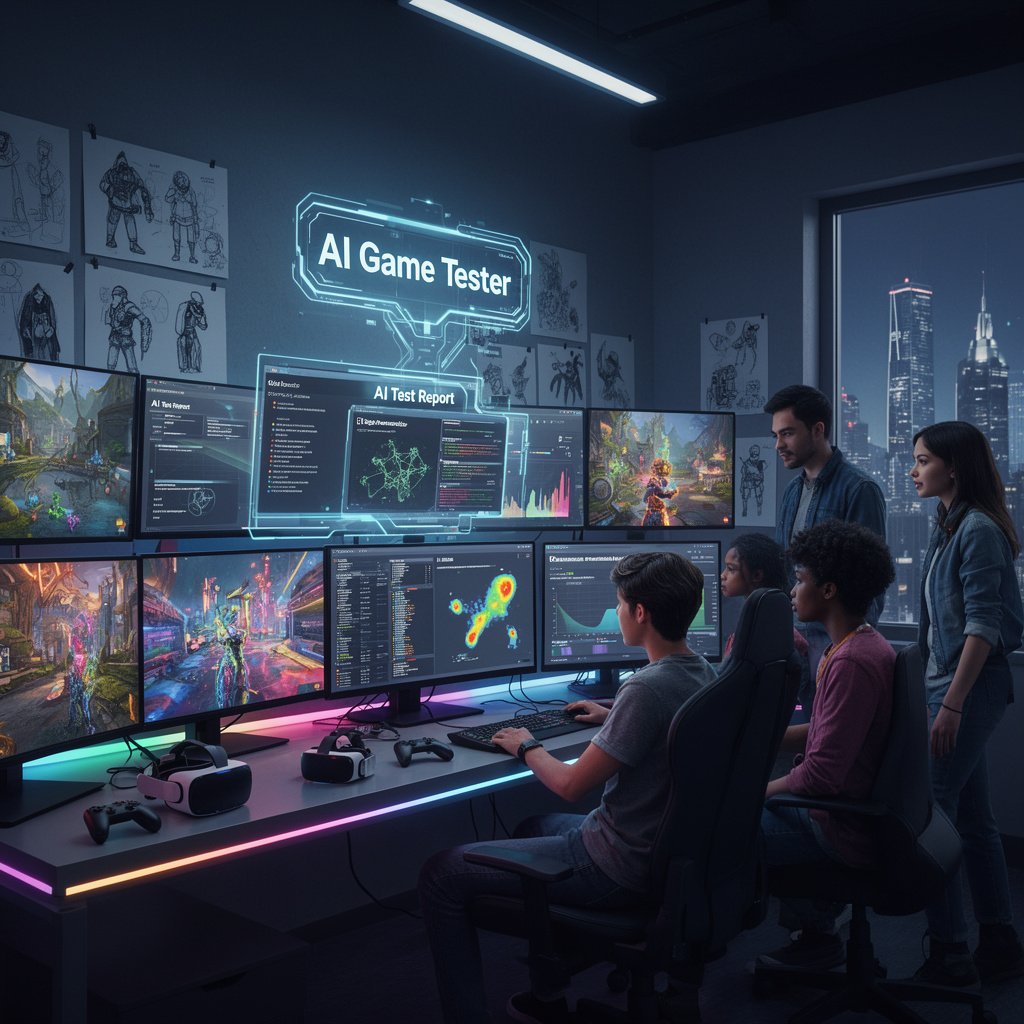
After spending over a decade in game development, I’ve witnessed quality assurance evolve from rooms packed with testers clicking through menus to sophisticated systems that can explore virtual worlds autonomously. The shift toward AI-based game testing isn’t just happening, it’s fundamentally changing how studios approach quality assurance.
The Old Way Wasn’t Working Anymore
Let me paint a picture. Back in 2015, I worked on a mid-sized RPG where our QA team spent three months trying to cover every dialogue branch, quest combination, and character interaction. Despite hundreds of hours of manual testing, we shipped with a game-breaking bug that triggered only when players completed two specific side quests in reverse order while carrying a particular item.
This scenario plays out constantly across the industry. Modern games are simply too complex for human testers to explore exhaustively. Open-world titles contain millions of possible state combinations. Multiplayer games generate unpredictable player behaviors. Traditional testing methods hit a wall.
That’s where AI-based game testing enters the conversation.
What AI-Based Testing Actually Looks Like
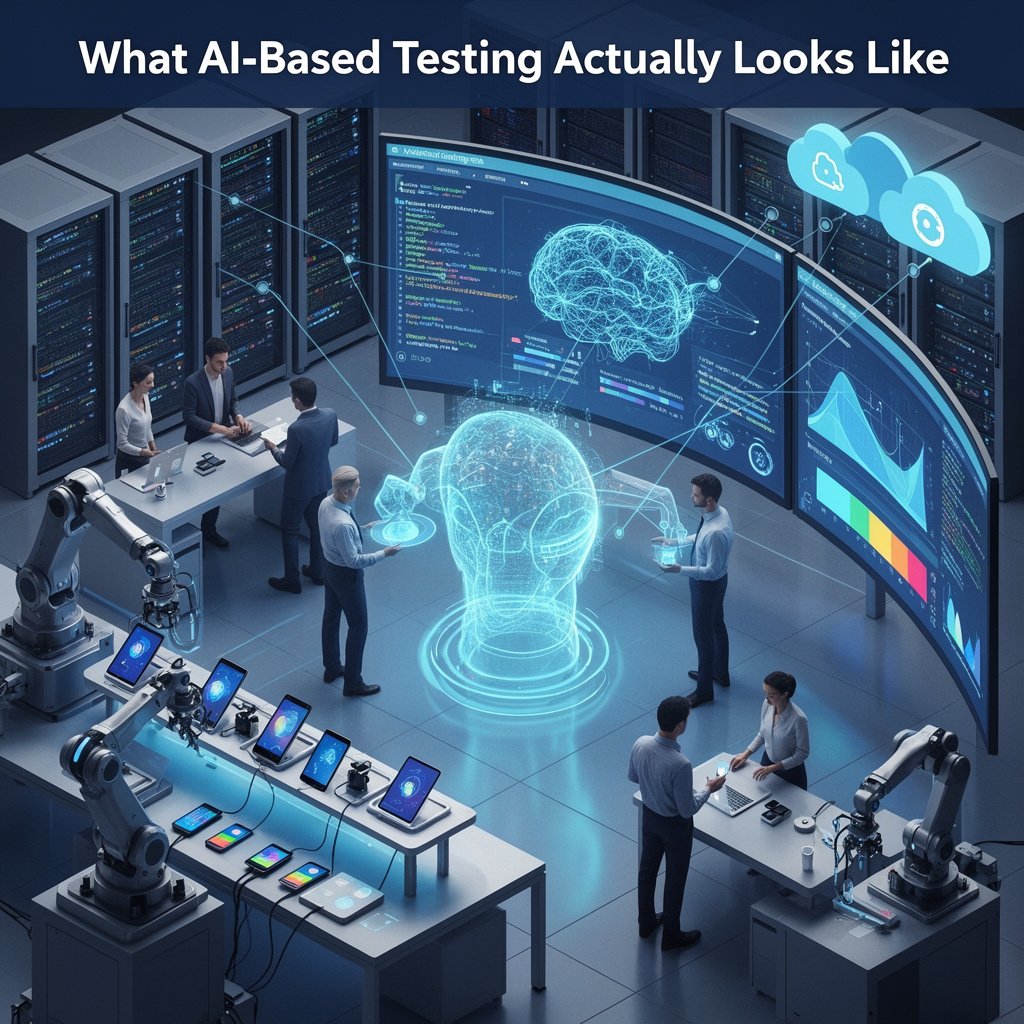
Forget the science fiction imagery. AI testing in games isn’t some sentient being playing your game and offering design critiques. It’s a collection of specialized systems designed to explore, interact, and identify problems at scales humans cannot match.
Most AI testing implementations fall into several categories. Exploration bots use reinforcement learning to navigate game environments, systematically discovering areas, triggering events, and identifying collision issues or invisible walls. These systems learn over time which actions produce interesting results and adapt their behavior accordingly.
Regression testing automation catches when new code breaks existing functionality. Rather than having testers manually verify that yesterday’s working features still function, AI systems run thousands of test cases overnight.
Performance profiling tools monitor frame rates, memory usage, and loading times across different hardware configurations, flagging potential optimization issues before players encounter them.
The companies doing this well Ubisoft with their Commit Assistant, EA with their testing automation, and numerous indie studios using tools like GameDriver aren’t replacing human testers. They’re multiplying their effectiveness.
Real Results from the Field
A colleague at a major studio shared some remarkable numbers recently. Their team implemented machine learning-based exploration testing on an action-adventure title. Within the first week, the system discovered 37 unique bugs that had escaped six months of manual testing. Most were edge cases specific combinations of player actions, environmental conditions, and timing that felt random but were entirely reproducible once identified.
Another studio I’ve consulted with uses AI for balance testing in their strategy games. Instead of waiting for beta feedback, they train neural networks to play their game at various skill levels. The system can simulate thousands of matches overnight, generating heat maps of unit usage, identifying overpowered strategies, and highlighting content that players might never encounter because it’s ineffective.
The time savings are substantial. What previously required teams of 40-50 testers working rotating shifts can now be augmented by AI systems that never sleep, never get bored, and never accidentally skip sections because they assume something works.
The Limitations Nobody Talks About
Here’s where my experience tempers the enthusiasm. AI testing has genuine limitations that vendors sometimes gloss over.
These systems excel at finding technical bugs crashes, performance issues, broken mechanics. They struggle with subjective quality. An AI cannot tell you that a joke doesn’t land, that a character’s motivation feels inconsistent, or that a level’s pacing drags. Creative assessment still requires human judgment.
Training these systems requires significant upfront investment. You need substantial computing resources, team members who understand machine learning pipelines, and time to tune the systems for your specific game. Small studios with tight budgets and deadlines often find the setup costs prohibitive.
False positives remain a challenge. AI systems sometimes flag “bugs” that are actually intentional design choices. A character walking through a designated no-clip area might trigger alerts even when it’s meant to happen. Teams spend time investigating non-issues.
Additionally, truly creative gameplay often confuses AI testers. Speedrunning techniques, unintended physics exploits, and emergent strategies that creative human players discover regularly fall outside what AI systems are trained to explore.
Where This Technology Heads Next
The integration of large language models is opening new possibilities. We’re beginning to see testing systems that can interpret natural language test cases, understand design documentation, and generate more meaningful bug reports than simple crash logs.
Cloud-based testing platforms are democratizing access. Studios that couldn’t afford dedicated AI testing infrastructure can now access these capabilities through subscription services.
The combination of AI testing with player analytics creates feedback loops that previous generations of developers couldn’t imagine. You can identify potential issues before launch, then validate your fixes against real player behavior after release.
Finding the Right Balance
Having implemented AI testing tools across multiple projects, my advice is straightforward: view these systems as force multipliers for your human QA team, not replacements.
The most successful implementations I’ve seen pair AI exploration with experienced testers who understand player psychology. Machines find the bugs. Humans prioritize which ones matter. Machines verify fixes don’t break other features. Humans assess whether the game is actually fun.
Studios that embrace this hybrid approach ship better games faster. Those expecting AI to solve every QA problem end up disappointed.
The technology continues maturing. Each year brings more accessible tools, better accuracy, and broader capabilities. For anyone working in game development, understanding AI-based testing isn’t optional anymore it’s becoming as fundamental as knowing your game engine.
Frequently Asked Questions
What is AI-based game testing?
AI-based game testing uses machine learning algorithms and automated systems to explore games, identify bugs, test performance, and validate functionality at scales beyond manual testing capabilities.
Does AI testing replace human QA testers?
No. AI testing augments human testers by handling repetitive tasks and exploring edge cases, while humans focus on subjective quality, creativity, and player experience assessment.
Which companies use AI for game testing?
Major publishers like Ubisoft, EA, and Blizzard use proprietary AI testing systems. Many studios utilize third-party tools like GameDriver, Functionize, and custom machine learning solutions.
How much does AI testing cost to implement?
Costs vary widely. Cloud-based solutions may run hundreds to thousands monthly, while custom implementations require significant upfront development and infrastructure investment.
What types of bugs can AI testing find?
AI excels at finding crashes, performance issues, collision problems, pathfinding failures, and regression bugs. It struggles with subjective issues like pacing, humor, or narrative consistency.
How long does it take to implement AI testing?
Basic automation can be implemented within weeks. Comprehensive machine learning systems typically require three to six months of development, training, and integration work.